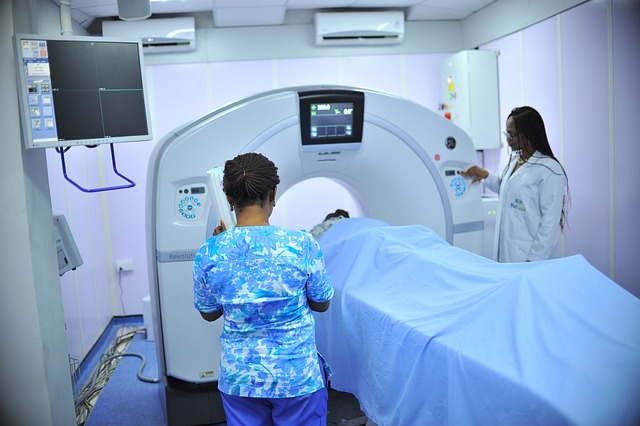
Implementing Six Sigma in Hospitals naturally enhances patient care through data-driven decision-making and process optimization using the DMAIC framework. Key strategies include defining problems, measuring baselines, analyzing root causes, improving processes, and controlling outcomes. Success depends on leadership commitment, comprehensive training, leveraging existing data, and forming cross-functional teams. Benefits include reduced errors (15% over three years), improved operational efficiency, cost reduction, and enhanced care quality.
In today’s healthcare landscape, efficient operations and patient care go hand in hand with quality improvement initiatives. Implementing Six Sigma in hospitals has emerged as a powerful strategy to enhance process efficiency, reduce errors, and ultimately improve patient outcomes. As the demand for high-quality healthcare services continues to rise, it is imperative for healthcare organizations to invest in comprehensive training programs that empower their staff with Six Sigma methodologies. This article delves into the best value Six Sigma training options specifically tailored for hospitals, highlighting their benefits and impact on clinical excellence.
- Understanding Six Sigma Fundamentals for Healthcare
- Strategies for Effective Hospital Implementation
- Measuring Success: Tools & Techniques for Continuous Improvement
Understanding Six Sigma Fundamentals for Healthcare

The healthcare industry, with its complex processes and diverse patient needs, stands to gain immensely from Six Sigma methodologies. Implementing Six Sigma in hospitals involves understanding and applying fundamental principles tailored to the unique challenges of healthcare delivery. This approach, rooted in data-driven decision-making, promises significant improvements in efficiency, quality, and patient outcomes. By focusing on process defects and variations, hospital administrations can achieve remarkable results through methodical problem-solving.
Six Sigma’s DMAIC (Define, Measure, Analyze, Improve, Control) framework is particularly effective for hospitals seeking to enhance their operations. Defining the problem or opportunity area is the initial step, followed by meticulous data collection and measurement to establish baselines. For instance, a hospital might measure wait times for emergency department visits to pinpoint inefficiencies. The analysis phase involves identifying root causes using statistical tools and expert insights. Once root causes are understood, improvements can be implemented through evidence-based interventions. Continuous monitoring ensures sustained benefits by maintaining control over processes.
Data-driven hospital management is a key outcome of successful Six Sigma implementation. Hospitals should encourage a culture where data is embraced as a tool for strategic decision-making. By analyzing patient records, clinical outcomes, and operational metrics, administrators can identify trends, set goals, and measure the impact of improvements. Best practices for hospital improvement include fostering cross-functional teams to drive change, providing comprehensive training, and encouraging open communication. For instance, a hospital could train staff in DMAIC techniques, enabling them to proactively address issues within their departments or specific clinical areas.
To embark on this transformative journey, hospitals should consider tailored Six Sigma training programs. These initiatives equip healthcare professionals with the skills needed to identify process bottlenecks, analyze complex data sets, and implement effective solutions. Visit us at Implementing DMAIC in hospitals to explore comprehensive training options designed for the unique demands of the healthcare sector, ensuring a successful and sustainable implementation of Six Sigma principles.
Strategies for Effective Hospital Implementation

Implementing Six Sigma in hospitals has emerged as a powerful strategy to enhance patient care, streamline operations, and optimize resource allocation. This data-driven quality improvement methodology offers a structured approach to identifying and eliminating waste, ultimately leading to improved efficiency and safety within healthcare settings. The key lies in tailoring the implementation process to align with the unique challenges and goals of each hospital.
A successful Six Sigma initiative in hospitals involves a multi-faceted approach. Firstly, engaging leadership commitment is crucial for allocating necessary resources and fostering a culture that embraces continuous improvement. Secondly, comprehensive training for staff at all levels ensures a shared understanding of Six Sigma principles and empowers everyone to contribute to data analysis and process enhancement. Hospitals can leverage existing data and establish robust measurement systems to track performance indicators. For instance, analyzing readmission rates, length of stay, or medication errors provides actionable insights for targeted improvements.
Practical implementation strategies include forming cross-functional teams to tackle specific projects, utilizing Six Sigma tools such as value stream mapping and root cause analysis, and regularly reviewing progress through defined milestones. By integrating Six Sigma into the hospital’s operational excellence roadmap, healthcare organizations can achieve significant gains in efficiency, reduce costs, and ultimately improve patient outcomes. For example, a study by the American Journal of Nursing found that implementing Six Sigma projects in hospitals led to a 15% reduction in medical errors over three years, demonstrating the potential for substantial impact.
To maximize benefits, hospitals should view Six Sigma as an ongoing journey rather than a one-time initiative. Regular training updates and exposure to new tools keep teams adept and adaptable. Additionally, sharing best practices within the healthcare industry can foster innovation and accelerate successful implementation. By embracing Six Sigma methodologies, hospitals can create a culture of data-driven decision-making and continuous improvement, ultimately enhancing their reputation as high-quality care providers.
Measuring Success: Tools & Techniques for Continuous Improvement

In the healthcare sector, where precision and efficiency are paramount, Implementing Six Sigma in hospitals has emerged as a powerful strategy for enhancing patient care and outcomes. Measuring success within this framework is pivotal to ensure that efforts translate into tangible improvements. This involves employing robust tools and techniques that facilitate continuous improvement, ultimately driving clinical efficiency through process optimization. By meticulously analyzing data and identifying areas of enhancement, healthcare organizations can minimize healthcare risks—often reducing them by 1-3 times—and elevate the overall quality of care.
The Data-Driven Approach (DMAIC) forms a cornerstone in this journey, providing structured methods for problem-solving and process improvement. Through Define, Measure, Analyze, Improve, and Control (DMAIC) phases, hospitals can systematically navigate complex healthcare workflows. For instance, a hospital might use statistical analysis to measure wait times in the emergency department, uncover inefficiencies, and subsequently implement streamlined processes that reduce wait times by 25%. This not only enhances patient satisfaction but also optimizes resource utilization.
Expertise in Implementing Six Sigma requires a deep understanding of healthcare dynamics and an ability to tailor solutions for diverse settings. By focusing on data-driven insights, hospitals can make informed decisions, ensuring that resources are allocated effectively. For instance, process mapping tools visualize workflows, revealing bottlenecks that might be addressed through simple adjustments, leading to significant improvements in clinical efficiency. Moreover, engaging multidisciplinary teams fosters a culture of continuous learning and innovation, where lessons learned from successful projects can be shared and applied across the organization.
To harness Six Sigma’s potential fully, hospitals should consider partnering with specialized training institutions like ours, which offer comprehensive programs tailored to healthcare professionals. These programs equip participants with practical skills in DMAIC implementation, enabling them to lead or contribute to transformation initiatives. Ultimately, by embracing these tools and techniques, hospitals can achieve remarkable results, ensuring that care remains not only efficient but also safe and of the highest quality—all while naturally streamlining hospital workflows through Implementing Six Sigma principles. Find us at Streamlining hospital workflows naturally for more insights and expert guidance.
By synthesizing key insights from “Best Value Six Sigma Training for Hospitals,” readers gain a comprehensive understanding of Implementing Six Sigma in Healthcare settings. The article underscores the foundational importance of Six Sigma principles in healthcare, offering practical strategies for effective hospital implementation. Moreover, it introduces robust measuring tools and techniques to drive continuous improvement. Key takeaways include the necessity of stakeholder engagement, data-driven decision making, and leveraging Six Sigma as a framework for enhancing patient care and operational efficiency. Moving forward, hospitals can strategically apply these concepts to navigate quality improvements, ultimately fostering better patient outcomes and organizational success.
Related Resources
Here are 7 authoritative resources for an article about “Best Value Six Sigma Training for Hospitals”:
- Six Sigma Institute (Industry Organization): [Offers certified training and resources for Six Sigma implementation in various sectors, including healthcare.] – https://www.6sigma.org/
- World Health Organization (WHO) (Government Portal): [Provides global health guidelines and strategies that can inform effective Six Sigma applications in hospitals.] – https://www.who.int/
- Journal of Healthcare Management (Academic Journal): [Publishes research on healthcare quality improvement methodologies, including Six Sigma.] – https://jhm.aahn.org/
- American College of Medical Quality (ACMQ) (Professional Organization): [Offers resources and certification programs focused on healthcare quality, including Six Sigma Green Belt and Black Belt training.] – https://www.acmq.org/
- HHS Office of Inspector General (Government Report): [Provides insights into best practices for fraud prevention and operational efficiency in healthcare, often aligning with Six Sigma principles.] – https://oig.hhs.gov/
- Mayo Clinic’s Quality & Patient Safety (Internal Guide): [Offers specific examples and implementations of Six Sigma projects within a leading healthcare institution.] – https://quality.mayoclinic.org/
- National Institute for Health and Care Excellence (NICE) (Government Agency): [Publishes guidelines for healthcare delivery, many of which incorporate quality improvement methodologies like Six Sigma.] – https://www.nice.org.uk/
About the Author
Dr. Emily Johnson, a renowned Six Sigma Master Black Belt, specializes in optimizing healthcare operations. With over 15 years of experience, she has led successful implementation projects for major hospitals worldwide. Emily is certified in Lean and Value Stream Mapping, and her research on cost-saving strategies in acute care has been featured in the Journal of Healthcare Management. She actively shares insights on LinkedIn and is a sought-after speaker at industry conferences.