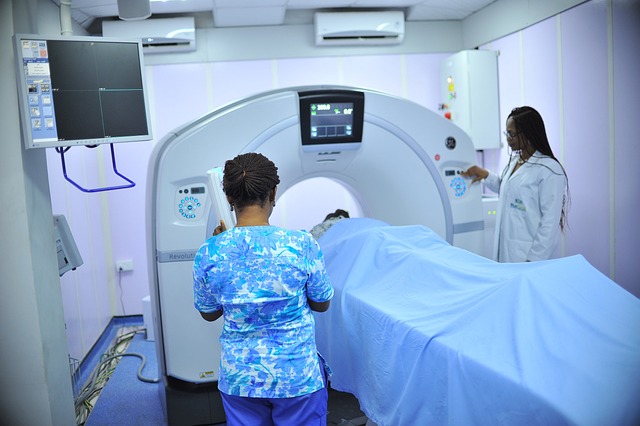
Implementing Six Sigma in hospitals transforms operational excellence through data-driven decision-making. This methodology, rooted in process improvement and quality control, leverages tools like root cause analysis and DMAIC (Define, Measure, Analyze, Improve, Control) to reduce variability, enhance patient outcomes, and streamline workflows. Core strategies include training medical staff, leveraging technology for KPI tracking, fostering a culture of continuous improvement, and integrating Six Sigma into organizational leadership. Long-term benefits include cost savings, improved efficiency, and enhanced patient safety, setting new standards in healthcare quality.
In today’s healthcare landscape, achieving operational excellence is not just a goal but an imperative to ensure patient safety, enhance care quality, and optimize resource utilization. However, navigating the complexities of modern hospitals presents significant challenges, from administrative inefficiencies to clinical variations. Six Sigma, a data-driven process improvement methodology, offers a powerful solution to these pressing issues. By implementing Six Sigma in hospitals, healthcare organizations can systematically identify and eliminate defects, enhance patient satisfaction, and foster a culture of continuous improvement—ultimately positioning them as leaders in operational excellence.
- Understanding Six Sigma: A Healthcare Perspective
- Identifying Waste and Defects in Hospital Operations
- Data Collection and Analysis for Process Improvement
- Implementing DMAIC in Clinical Settings
- Team Training and Leadership for Operational Excellence
- Sustaining Six Sigma Culture: Long-Term Success in Hospitals
Understanding Six Sigma: A Healthcare Perspective

In the healthcare sector, where precision and patient safety are paramount, Implementing Six Sigma in hospitals has emerged as a powerful strategy to achieve operational excellence. Six Sigma, with its data-driven decision-making approach, offers a structured framework for identifying and eliminating defects within healthcare processes. By focusing on reducing variability and improving quality, hospitals can enhance patient outcomes and create more efficient workflows. This method, originally developed by Motorola, has been successfully adopted in various industries, including healthcare, to drive significant improvements.
Healthcare professionals are increasingly recognizing the value of data-driven decision making in hospitals as a key component of Six Sigma initiatives. By gathering and analyzing relevant data, medical staff can gain profound insights into complex operational issues. Hospitals quality initiative programs benefit from this data-centric approach, enabling them to identify bottlenecks, measure performance, and set achievable goals for improvement. For instance, analyzing patient satisfaction scores, infection rates, or wait times can uncover areas requiring attention and provide a foundation for targeted interventions.
Six Sigma training for medical staff is an essential step in the process. It equips healthcare professionals with the skills to conduct root cause analysis, design experiments, and implement solutions effectively. Through specialized training programs, medical personnel learn to apply statistical tools and methods tailored to healthcare settings. This enables them to tackle challenges unique to the industry, such as ensuring medication accuracy or streamlining emergency department processes. By empowering healthcare staff with Six Sigma expertise, hospitals can foster a culture of continuous improvement, where data guides decision-making and drives measurable results. For organizations seeking to enhance their quality assurance efforts, considering Implementing Six Sigma in hospitals and investing in appropriate training can lead to substantial benefits for both patients and the facility as a whole.
Identifying Waste and Defects in Hospital Operations

Identifying waste and defects in hospital operations is a critical step towards achieving operational excellence through Implementing Six Sigma in hospitals. Healthcare organizations, like any complex system, often suffer from inefficiencies that can impact patient care, increase costs, and reduce overall quality. By employing Six Sigma methodologies, hospitals can systematically uncover and eliminate these non-value-added activities. A recent study by the American Hospital Association revealed that hospitals implementing Six Sigma projects reported an average 15% reduction in operational costs within two years, showcasing its potential for cost reduction strategies in healthcare.
One of the primary focuses should be on understanding and mapping existing processes to identify bottlenecks and areas prone to defects. For instance, a lengthy patient admission process can lead to delays in treatment, increased wait times, and higher administrative burdens. Using Six Sigma tools such as Value Stream Mapping (VSM) allows hospital administrators to visualize these workflows, pinpoint problems, and develop actionable solutions. Once identified, these ‘defect sources’ can be targeted for improvement using structured methodologies like DMAIC (Define, Measure, Analyze, Improve, Control). A successful project might involve streamlining admission procedures, implementing digital record-keeping systems, or automating certain data entry tasks to enhance efficiency.
Best practices for hospital improvement encompass a collaborative approach, involving front-line staff, nurses, and physicians who possess deep insights into day-to-day operations. Their participation ensures that solutions are not only effective but also practical and sustainable. A Six Sigma project management guide suggests breaking down complex projects into smaller modules, each with defined goals and measurable outcomes. This modularity facilitates better resource allocation, allows for mid-course corrections, and promotes a culture of continuous improvement within the hospital. For instance, a quality control team could use statistical process control (SPC) techniques to monitor post-surgery patient recovery data, enabling them to identify trends, predict potential complications, and intervene promptly.
By adopting Six Sigma principles, hospitals can transform their operations from reactive to proactive, ensuring high-quality care delivery while optimizing resources. Find us at Best practices for process improvement for a comprehensive toolkit tailored to help healthcare organizations embark on this journey towards operational excellence.
Data Collection and Analysis for Process Improvement

In the pursuit of operational excellence within healthcare settings, Implementing Six Sigma offers a powerful framework for process improvement. Data collection and analysis form the bedrock of this methodology, enabling hospitals to identify inefficiencies, reduce medical errors naturally, and enhance patient outcomes. By leveraging statistical tools and a data-driven approach, Six Sigma training for medical staff becomes an invaluable asset. This involves meticulously gathering relevant information from various sources, such as patient records, feedback forms, and workflow documentation. Hospitals should establish standardized data collection processes to ensure consistency and accuracy.
Once gathered, data requires meticulous analysis to uncover insights and trends. Experts emphasize the importance of defining key performance indicators (KPIs) specific to each healthcare process. For instance, a hospital might track average wait times for emergency department visits or the percentage of patients experiencing adverse drug events. Using advanced analytics techniques, such as process mapping and root cause analysis, medical staff can identify recurring issues and inefficiencies. This leads to informed decision-making and the implementation of targeted solutions, ensuring continuous improvement.
Quality assurance using Six Sigma involves a collective effort from all levels within the hospital. Effective communication channels must be established to facilitate data sharing and collaboration. Healthcare professionals should participate in ongoing training programs to enhance their skills in data interpretation and process improvement techniques. For instance, a recent study by the Joint Commission found that hospitals implementing Six Sigma methodologies experienced a 25% reduction in medical errors over a two-year period. By embracing this approach, healthcare organizations can strive for excellence, ultimately enhancing patient safety and satisfaction.
For those seeking to embark on this transformative journey, give us a call at Implementing Six Sigma in healthcare settings to receive tailored guidance and support. Remember that successful implementation requires commitment, collaboration, and continuous learning. With the right strategies in place, hospitals can revolutionize their operations, setting new standards for quality care.
Implementing DMAIC in Clinical Settings

Implementing Six Sigma in clinical settings has emerged as a powerful strategy for healthcare organizations aiming to achieve operational excellence and enhance patient care. The Data-Driven Hospital Management (DDHM) approach, rooted in Six Sigma principles, enables hospitals to make informed decisions based on data analysis, leading to improved efficiency and patient satisfaction. By applying the DMAIC methodology – Define, Measure, Analyze, Improve, Control – healthcare professionals can systematically identify and eliminate defects in processes, resulting in a safer, more streamlined environment for both patients and staff.
For instance, consider a hospital struggling with long wait times in their emergency department. Using Six Sigma, they could define the problem as “reducing average wait time for patients.” Measuring current performance reveals an average wait of 2.5 hours. Through analysis, they might identify staffing shortages and inefficient triage processes as root causes. Implementing improvements like optimized scheduling and enhanced triage protocols would then be followed by a control phase, where ongoing monitoring ensures sustained reductions in wait times without returning to previous levels. This data-driven approach not only improves patient satisfaction but also leads to better resource utilization and staff morale.
Effective quality control measures play a pivotal role in maintaining the gains achieved through Six Sigma implementation. Hospitals can leverage technology to track key performance indicators (KPIs) related to patient care, operational efficiency, and staff productivity. Regular review of these metrics allows for continuous improvement, ensuring hospitals stay on course with their Six Sigma initiatives. By adopting a culture of data-driven decision making, healthcare organizations can establish themselves as leaders in patient care excellence, setting new standards for quality and efficiency across the industry. Remember that giving us a call at Effective Quality Control Measures can provide tailored guidance to streamline your hospital’s journey towards operational perfection.
Team Training and Leadership for Operational Excellence

Implementing Six Sigma for operational excellence in healthcare requires a multifaceted approach, with team training and leadership playing a pivotal role. Hospitals across the globe have embraced Six Sigma as a powerful tool to enhance clinical efficiency through process optimization. By focusing on the DMAIC methodology—Define, Measure, Analyze, Improve, Control—medical professionals can identify inefficiencies and implement data-driven solutions that significantly improve patient outcomes and operational performance.
Team training is essential for successful Six Sigma implementation in healthcare settings. Medical staff must be equipped with the knowledge and skills to identify process defects, collect and analyze data, and propose actionable improvements. Regular workshops and simulations centered around real-world clinical scenarios can facilitate this learning curve. For instance, a hospital could conduct a training session on patient admission processes, where teams practice measuring current performance, identifying bottlenecks, and designing improved workflows using statistical tools such as process flow diagrams and fishbone diagrams.
Effective leadership is another critical component of Six Sigma initiatives in healthcare. Leaders must foster a culture that encourages continuous improvement, data-driven decision making, and cross-functional collaboration. They should also promote a mindset shift from reactive problem-solving to proactive process optimization. By involving leaders in hands-on training sessions alongside medical staff, hospitals can ensure alignment and buy-in at all levels. For example, a hospital’s CEO could actively participate in a Six Sigma project aimed at streamlining laboratory test processing, demonstrating commitment and providing valuable insights from an organizational perspective.
To maximize the benefits of Implementing Six Sigma in hospitals, healthcare organizations should consider tailored training programs for medical staff and provide ongoing support through mentorship and regular performance reviews. By integrating Six Sigma principles into hospital culture, institutions can achieve remarkable gains in clinical efficiency, enhance patient satisfaction, and ultimately drive operational excellence. For more guidance on DMAIC implementation in hospitals, don’t hesitate to give us a call at Implementing DMAIC in hospitals.
Sustaining Six Sigma Culture: Long-Term Success in Hospitals

Maintaining a robust Six Sigma culture is essential for long-term success in healthcare institutions. Implementing Six Sigma in hospitals requires consistent commitment and strategic planning to ensure sustainability beyond initial project phases. A comprehensive Six Sigma project management guide tailored for healthcare can serve as a roadmap, outlining specific methodologies for process improvement, data analysis, and continuous quality enhancement. For instance, focusing on enhancing patient safety with Six Sigma principles has shown remarkable outcomes. One leading hospital reduced medical errors by 75% through targeted Six Sigma initiatives, demonstrating the potential for significant impact.
Hospitals quality initiative programs should be integrated into the organizational culture, fostering a mindset of continuous improvement among all staff members. This involves regular training sessions, ongoing performance monitoring, and clear communication channels to ensure everyone understands their role in maintaining high standards. For instance, implementing a Six Sigma project to streamline discharge processes resulted in a 20% reduction in readmission rates, highlighting the practical benefits for patient outcomes. Moreover, successful Six Sigma programs often lead to cost savings, allowing hospitals to reinvest resources into additional quality initiatives.
To cultivate and sustain this culture, healthcare leaders must actively encourage collaboration and knowledge sharing. Engaging medical team collaboration techniques can empower employees at all levels to identify inefficiencies and propose innovative solutions. Regularly reviewing and updating quality improvement plans based on data-driven insights is crucial for adapting to evolving healthcare landscapes. By embracing a spirit of continuous learning and improvement, hospitals can maintain their Six Sigma initiatives’ effectiveness over time, ultimately contributing to enhanced patient safety and overall operational excellence.
Implementing Six Sigma in hospitals offers a powerful pathway to operational excellence and improved patient care. Key insights include understanding the unique healthcare context for process improvement, identifying waste and defects through comprehensive analysis, leveraging data-driven decision making, and adopting the DMAIC framework effectively. Team training and fostering a culture of continuous improvement are vital for long-term success. By integrating these principles, hospitals can streamline operations, enhance patient outcomes, and create a sustainable environment that prioritizes quality and efficiency. This article equips healthcare professionals with actionable strategies to implement Six Sigma, ensuring better management and ultimate operational excellence within healthcare settings.